Glossary
Sewing has a vocabulary of its own, and patterns rarely stop to explain it. The most important terms have a full illustrated entry. Dozens more have a quick definition below, with a link to where the site covers them in depth. 23 full entries and 45 quick definitions so far.
A
B
-
Basting
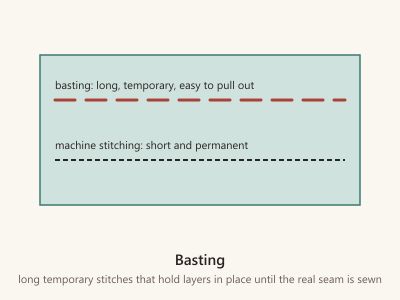
Long, temporary stitches that hold fabric in place until the permanent seam is sewn - hand and machine basting, when it's worth the time, and how to remove it cleanly.
-
Bias
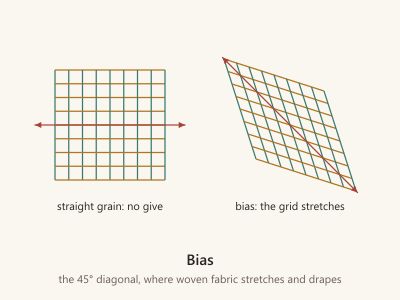
The diagonal direction across woven fabric, at 45 degrees to the threads, where cloth stretches and drapes most - used for binding, cowls and bias-cut dresses, and the reason some edges grow as you sew.


- Backstitch
- A few machine stitches sewn in reverse at the start and end of a seam to lock it. Also a strong hand stitch. More →
- Bar tack
- A short, dense row of zigzag stitches that reinforces a stress point, such as the ends of a buttonhole or a pocket corner. More →
- Bias tape
- Strips of fabric cut on the bias and pressed into folds, used to bind or face edges. More →
- Block (sloper)
- A basic fitted pattern with no style features, used as the starting point for new designs. More →
- Bodice
- The part of a garment between the shoulders and the waist. More →
- Busk
- A pair of flat steel strips forming the front opening of a corset, fastened with studs and loops. More →
C
- Casing
- A channel of fabric that holds elastic or a drawstring. More →
- Clapper
- A block of hardwood pressed onto a seam or crease straight after steaming, to set it flat without shine. More →
- Clip
- A short cut into a seam allowance, almost to the stitching, that lets an inward curve spread when turned. More →
- Coutil
- A dense, firm cotton fabric that resists stretching, used for corsets. More →
- Cross grain
- The crosswise direction of woven fabric, along the weft threads, from selvage to selvage. More →
- Cutting layout
- The diagram in a pattern showing how to arrange the pieces on the fabric for each width and size. More →
D
E
-
Ease
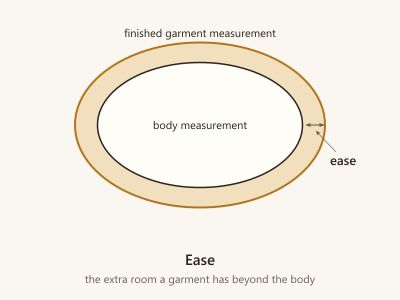
The difference between a body measurement and a garment's finished measurement - wearing ease for movement, design ease for style - plus negative ease in knits and ease as a sewing technique.

F
-
Facing
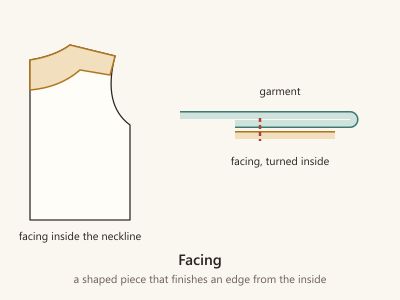
A shaped piece of fabric that finishes an edge such as a neckline or armhole from the inside - types of facing, how to attach one so it stays hidden, and how it differs from lining and binding.

- Feed dogs
- The toothed metal bars under the presser foot that move the fabric through the sewing machine. More →
- Finished measurement
- The measurement of the completed garment at a given point, used to work out how much ease it has. More →
- French curve
- A curved ruler used to draw and true armholes, necklines and other tight curves. More →
G
-
Grading
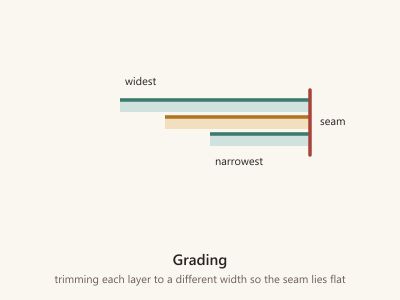
Trimming the layers of a seam allowance to different widths so the bulk steps down instead of forming a ridge - when to do it, which layer to cut narrowest, and how it differs from pattern grading.
-
Grainline
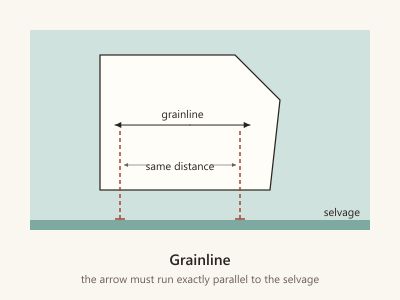
The direction of the threads in woven fabric, and the arrow on a pattern piece that must be laid parallel to it - how to place it accurately, straighten off-grain fabric, and why it decides how a garment hangs.
-
Gusset
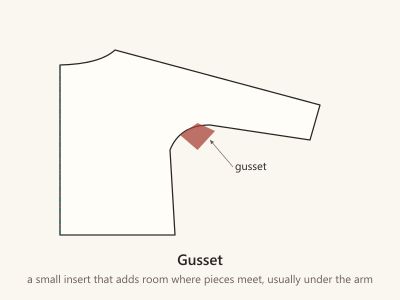
A small diamond, triangle or strip of fabric set into a seam to add room for movement - where gussets are used, why they work, and how to sew the points cleanly.


- Godet
- A triangle of fabric set into a seam or slash to add flare at the hem. More →
H
-
Hem
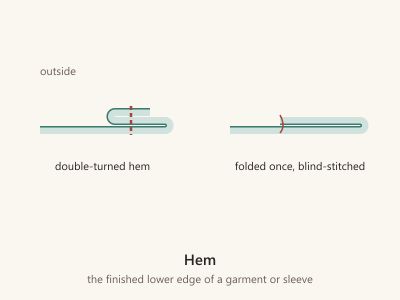
The finished lower edge of a garment or sleeve - hem allowances for different garments, the main hem finishes, levelling a hem, and dealing with curved and bias hems.

- Hong Kong finish
- A seam finish in which each seam allowance is bound separately with a bias strip, often used in unlined jackets. More →
I
- Interfacing
- A support layer added to collars, facings, waistbands and button bands to give them body. More →
L
- Lining
- A separate inner layer that hides the construction and helps a garment slide on. More →
M
-
Muslin / Toile
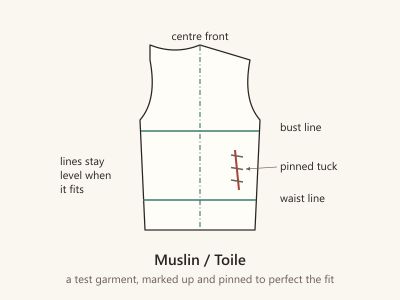
A test version of a garment sewn in inexpensive fabric to check fit before cutting the real thing - what to make it from, how to mark and fit it, and when you can skip it.

- Mitre
- A neat diagonal fold or seam at a corner, used on hems and bindings. More →
N
-
Nap
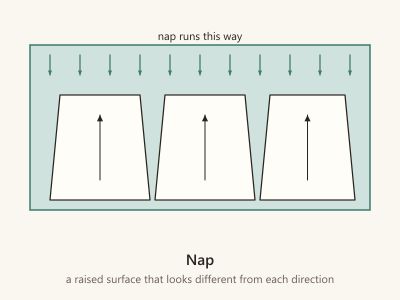
A raised or brushed surface, like velvet, corduroy or flannel, that looks lighter or darker depending on direction - how to find it, why it needs a one-way layout, and how to sew and press napped fabrics.
-
Notch
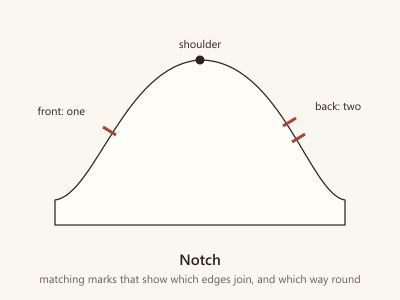
The small marks on the edge of a pattern piece that show where pieces match - how to cut and use them, what single and double notches mean, and why they matter most on curves.
-
Notions
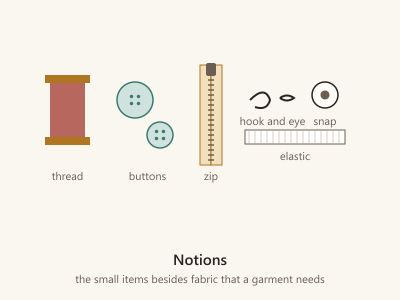
The small items besides fabric that a garment needs - thread, zips, buttons, elastic, interfacing, tapes and trims - how to read a pattern's notions list, and tips for buying them.


O
- Overlocker (serger)
- A machine that sews a seam, trims the edge and wraps it in thread in one pass. More →
P
-
Placket
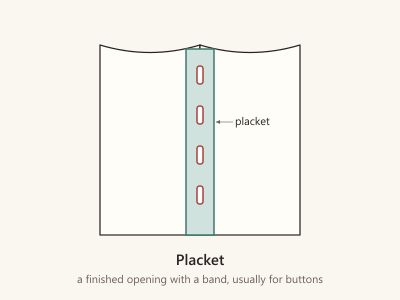
A finished opening in a garment, usually with a band for buttons or snaps - shirt front plackets, sleeve plackets, polo and side plackets, and tips for sewing them neatly.
-
Pressing
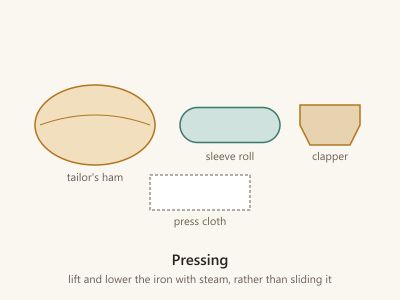
Lifting and lowering the iron with steam to set seams and shape fabric, rather than sliding it - why pressing as you sew matters, the essential pressing tools, and rules for different fabrics.
-
Princess Seam
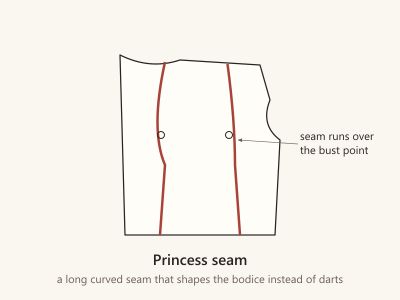
A long, curved seam running over the bust from the shoulder or armhole to the waist or hem, shaping a garment without darts - shoulder vs armhole princess seams, why they're easy to fit, and how to sew the curves.


- Pad stitching
- Small hand stitches that attach canvas to cloth and shape collars and lapels in tailoring. More →
- Pin tuck
- A very narrow stitched fold, usually one of a row, used as decoration. More →
- Pinking
- Cutting an edge with zigzag-bladed shears to reduce fraying on firm fabrics. More →
- Presser foot
- The part of a sewing machine that holds the fabric down against the feed dogs while you sew. More →
R
-
Right Side / Wrong Side
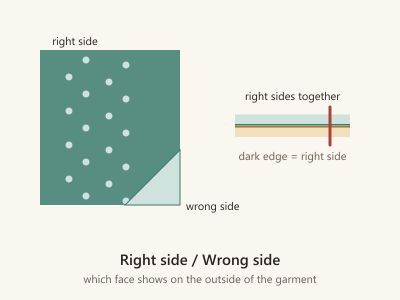
Which face of the fabric shows on the finished garment, how to tell them apart on tricky fabrics, and what instructions mean by 'right sides together' and 'wrong sides together'.

S
-
Seam Allowance
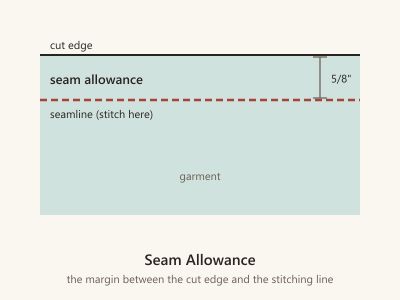
The margin of fabric between the cut edge and the stitching line - standard widths, how to sew a consistent allowance, finishing it, and what happens when it's wrong.
-
Selvage
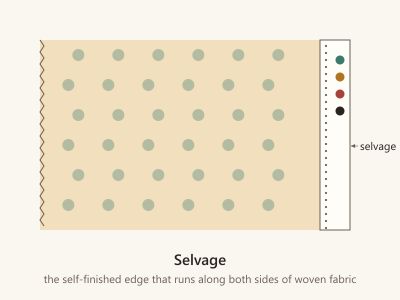
The firm, self-finished edges along both sides of a length of woven fabric - how they form, what the printed selvage tells you, and why they're a grain reference but usually shouldn't go into a seam.
-
Staystitching
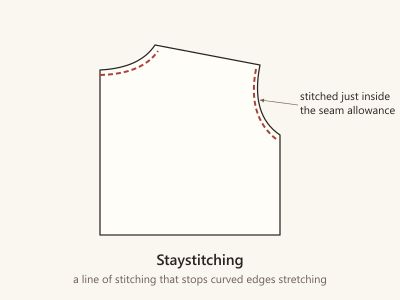
A single line of regular stitching sewn just inside the seam allowance of a curved or bias edge, soon after cutting, to stop it stretching while you work - where, when and how to do it.


- Seam finish
- Any treatment of a raw seam allowance edge that stops it fraying, such as overlocking, zigzag or binding. More →
- Slipstitch
- A nearly invisible hand stitch that joins a folded edge to another layer, used for hems and linings. More →
- Stay tape
- A narrow tape, or strip of fusible interfacing, attached along an edge so it can't stretch. More →
T
-
Topstitching
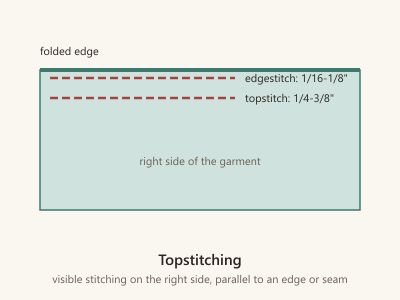
Stitching sewn on the right side of a garment, parallel to an edge or seam - what it does, edgestitching vs topstitching, thread and needle choices, and how to keep it straight.

- Tailor's ham
- A firm, rounded cushion for pressing darts and curved seams without flattening them. More →
- Tailor's tacks
- Loose loops of thread sewn through a pattern and both fabric layers to transfer markings. More →
- Turn of cloth
- The small amount of fabric used up when one layer folds around another; why upper collars are cut slightly larger. More →
- Twill
- A weave that forms diagonal lines on the fabric surface, as in denim and gabardine. More →
U
-
Underlining
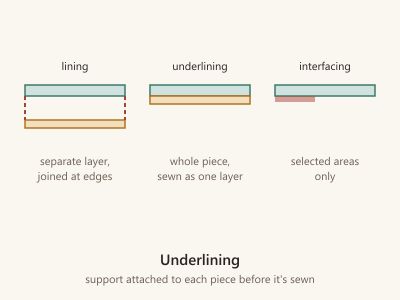
A support fabric cut to the same shape as each garment piece and attached before construction, so the two layers act as one - how it differs from lining and interfacing, which fabrics to use, and how to attach it.
-
Understitching
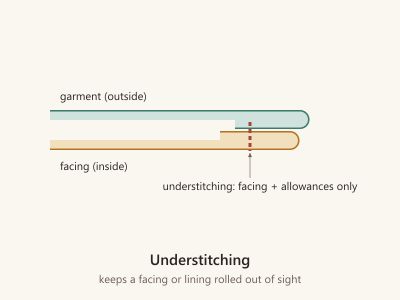
A row of stitching that holds a seam's allowances to the facing or lining, so the seam rolls inside and stays out of sight - where to use it, how to sew it, and how to deal with points and corners.


W
- Walking foot
- A presser foot that feeds the top layer of fabric at the same rate as the bottom, for knits, stripes and thick layers. More →
- Warp and weft
- The lengthwise (warp) and crosswise (weft) threads of a woven fabric. More →
- Wearing ease
- The minimum extra room a garment needs so you can breathe, sit and move. More →
- Welt
- A strip of fabric that finishes the edge of a pocket opening, as in a welt pocket.
Y
-
Yoke
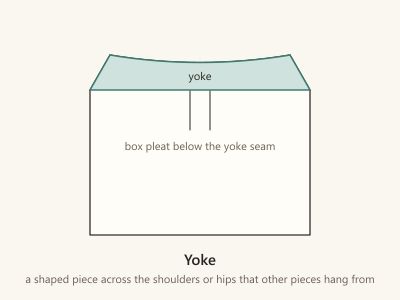
A shaped piece across the shoulders or hips that the rest of the garment hangs from - shirt yokes, skirt and jeans yokes, why yokes replace darts, and the neat 'burrito' method for a double shirt yoke.

Z
- Zigzag stitch
- A side-to-side machine stitch used to finish raw edges and to sew knits so the seam can stretch. More →