Cotton Poplin
A crisp, tightly woven plain-weave cotton used for shirts, dresses and first projects - how it's made, how to choose a good one, pre-washing, cutting, sewing and pressing it.
Published · Updated

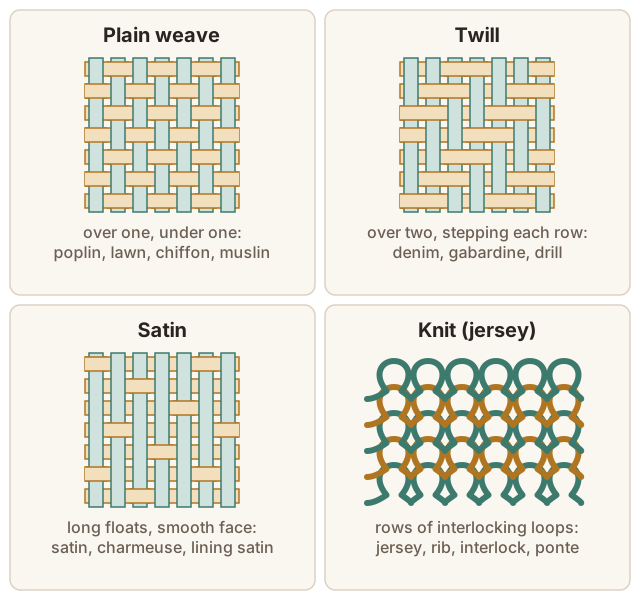
Poplin is a tightly woven, plain-weave fabric, most often cotton, with a smooth surface and a very fine crosswise rib you can feel more easily than see. The rib comes from the construction: poplin has many more lengthwise (warp) threads per inch than crosswise (weft) threads, and the weft is often slightly thicker, so the warp threads bend over it and form tiny ridges across the fabric. The result is crisp without being stiff, opaque for its weight, and smooth enough to print on cleanly.
It's the fabric of classic button-up shirts, shirt dresses, summer skirts and children's clothes, and it's the fabric I'd suggest for almost anyone's first garment.
Poplin, broadcloth, lawn and quilting cotton
Several plain-weave cottons look similar on the bolt:
- Poplin is crisp, with a fine rib, typically light to medium weight. The name is used loosely, and some fabrics sold as poplin are simply smooth plain weaves.
- Broadcloth in the US is a very similar, tightly woven shirting cotton, and the two names are often used interchangeably. (In wool, "broadcloth" means something quite different: a dense, felted woollen.)
- Lawn and voile are finer and lighter, softer and more translucent. They're used for blouses, summer dresses and linings.
- Quilting cotton is a plain weave made for quilting, usually a little coarser and stiffer than good poplin. It works for structured skirts and children's clothes, but can feel boxy in a blouse.
Choosing a good poplin
- Hold it to the light. A good poplin is opaque for its weight, with an even weave and no thin patches.
- Crumple a corner in your hand for a few seconds. Good poplin creases, as all cotton does, but springs back somewhat. Cheap, heavily sized poplin feels stiff and papery on the bolt and goes limp after washing, because the stiffness came from a finish, not the weave.
- Check the fibre content. 100% cotton presses best. Cotton-polyester blends wrinkle less but don't take a sharp press. Poplins with a few per cent elastane stretch slightly across the width, which is comfortable in fitted shirts but needs a ballpoint or stretch needle and handles slightly differently.
- Look at the weight. Light poplins (around 90-110 g/m², or 3-3.5 oz per square yard) suit shirts and blouses. Heavier ones (130 g/m² and up) suit skirts, trousers and shirt dresses that need more body.
Preparing it
Always pre-wash. Cotton shrinks the first time it's washed and dried, commonly by a few per cent, sometimes more on looser weaves. Wash and dry the fabric the way you'll wash the finished garment, before cutting. Finish the cut ends with a zigzag or overlock first, so they don't fray into a tangle in the machine. Then press, and check the grain (see Grainline), because washing can pull cotton slightly off-grain.
Cutting
Poplin is stable and doesn't shift much, which is part of why it's easy. Lay it out folded selvage to selvage, check the grain, and pin or weight the pattern pieces. Use sharp shears or a rotary cutter. Mark darts with a tracing wheel and carbon, or with chalk. Most poplins show marks less than finer cottons do.
Sewing
- Needle: universal or Microtex, 70/10 for light shirting, 80/12 for medium weights.
- Thread: all-purpose polyester or 50 wt cotton.
- Stitch length: about 2.5 mm, slightly shorter (2.2 mm) for fine shirting.
- Seam finishes: almost anything works. Overlocking or zigzag is fine for everyday garments. French seams suit lighter poplins and unlined blouses. Flat-felled seams are the traditional shirt finish.
- Interfacing: a light woven or knit fusible for collars, cuffs and button bands. Heavy interfacing makes poplin collars stiff and board-like. See Fusible Interfacing.
Poplin is also an excellent fabric to practise new techniques on, such as buttonholes, gathering, collars and bias binding, because it marks clearly, presses well and doesn't hide mistakes or create new ones.
Pressing
Cotton tolerates a hot iron with steam, and poplin presses to a sharp crease, which makes collars, pleats and hems crisp. Press seams as you sew them. Press darker poplins on the wrong side, or with a press cloth, to avoid shine.
Caring for the finished garment
Poplin wrinkles. Remove it from the dryer promptly, or line-dry it and iron it while slightly damp. Colours may fade a little with repeated washing, which is why darker and brightly printed poplins are best washed inside out in cool water.