Selvage
Published · Updated

The selvage (also spelled selvedge, from "self-edge") is the finished edge along each long side of a woven fabric. It forms on the loom where the weft thread reaches the edge of the warp and turns back for the next row, so the edge is closed and doesn't fray. Selvages are usually woven more densely than the body of the fabric, sometimes with extra or stronger warp threads, so they stay firm through weaving and finishing.
On a bolt, the selvages are the two edges that run the full length of the fabric. The cut ends, where the fabric was cut from the bolt, are not selvages, and they do fray.
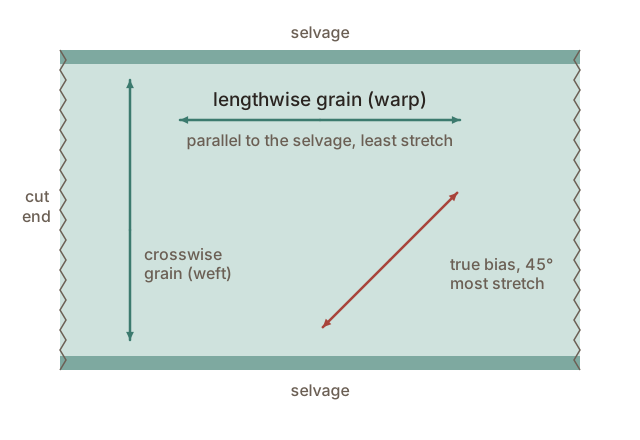
A grain reference
Because the selvage runs exactly along the lengthwise grain, it's the reference for laying out a pattern. Measure from each end of a piece's grainline arrow to the selvage, and when both distances match, the piece is on grain. It's also how you find the true bias: fold a straight crosswise edge down to meet the selvage, and the diagonal fold is the bias.
Reading the printed selvage
On many printed cottons, the selvage carries useful information:
- The designer, collection and manufacturer, handy for finding more of the same fabric.
- Colour registration dots, one for each ink colour used in the print. They help with matching thread or coordinating fabrics.
- Care or fibre content, sometimes.
Take a photo of the selvage before you cut it off, or keep a scrap, if there's any chance you'll want to buy more.
Width is measured between the selvages
A fabric's quoted width (for example 45"/115 cm or 60"/150 cm) is the distance from selvage to selvage. The usable width is a little less, because the selvage itself, and often a strip of pinholes or unprinted fabric beside it, can't be used for pattern pieces. Measure your actual fabric before relying on a tight layout. The Fabric Width Converter shows how width affects how much fabric you need.
Keep it out of your seams (usually)
It's tempting to use the selvage as a ready-finished seam allowance, but it usually causes trouble:
- It's woven more tightly, so it can shrink differently from the rest of the fabric when washed, puckering the seam.
- It can be stiffer or thicker, making a ridge.
- On some fabrics it's a slightly different colour or texture.
Lay pattern pieces just inside the selvage, so the cutting lines avoid it. If a selvage looks tight, with the fabric rippling beside it, clip into it every few inches before laying out, so the fabric can lie flat.
There are exceptions. Some sewists use a selvage deliberately as a non-fraying edge on a straight seam in a stable fabric, such as a centre back seam or a pocket facing, or as a decorative edge, like the coloured selvage ("selvedge denim") shown off on the turned-up hems of jeans woven on traditional narrow shuttle looms. Test-wash a scrap first if you plan to sew one into a seam.
Knit fabrics
Knits don't have true selvages, though many have edges that were stabilised with adhesive or held by pins during finishing. Those edges are often distorted, perforated or stiff, and should be cut away. Find the knit's lengthwise direction by following the vertical ribs instead.