2020s: Comfort and Nostalgia
Fashion so far this decade - pandemic loungewear and the sewing boom, cottagecore, the fast Y2K and 1990s revival, 'quiet luxury', microtrends and ultra-fast fashion, and the growth of mending and secondhand clothing.
Published · Updated

Writing about a decade that's still under way is different from writing about the others in this section. The patterns are still forming, and some of what seems important now will look like a passing moment in ten years. So treat this as notes in progress, written in 2026, which will need revisiting. Several threads are already clear, and most of them trace back to the pandemic years at the start of the decade.
Comfort first
Lockdowns in 2020 and 2021 put much of the world at home, and clothes followed. Sweatpants, hoodies, loungewear, soft knits and slippers became daily wear. Pyjama-like sets and comfortable, elastic-waisted clothes stayed in wardrobes long after offices reopened. This extended the athleisure of the previous decade rather than reversing it. Relaxed, oversized cuts and stretch fabrics remain common in everyday clothing.
The pandemic sewing boom
Being at home also sent many people back to sewing. In the first months of the pandemic, home sewists made face masks in huge numbers, and sewing machines were in short supply in many places. A lot of new sewists stayed with it, moving on from masks to clothes, often learning from online tutorials and independent patterns. Mending, upcycling and making your own clothes gained a large online following.
Cottagecore and handmade looks
An early-decade aesthetic called cottagecore romanticised rural life and handmade things: puff-sleeved, smocked and gathered dresses in floral prints, aprons, embroidery and knitting. It was ideal home-sewing territory, with simple shapes built from gathering, elastic shirring and ruffles.
Nostalgia on a short loop
Fashion revivals usually skip a generation, but the 2020s brought back late-1990s and 2000s styles within about twenty years: low-rise jeans, baby tees, butterfly clips, logos, and the silhouettes covered in this site's 2000s entry and 1990s entry. Social media, especially short-video platforms, drove the revival, introducing a younger generation to styles their parents remembered.
Quiet luxury
In the opposite direction, "quiet luxury" became a widely discussed trend: understated, well-made clothes in good fabrics and neutral colours, with no visible logos, valued for quality rather than recognisability. It was a reaction against the logo-driven fashion of earlier years.
Microtrends and ultra-fast fashion
Trends now rise and fall within weeks on social media. "Microtrends" are named, adopted and forgotten in a single season. Ultra-fast fashion retailers, selling online at very low prices and adding thousands of new items constantly, grew rapidly, and with them concern about waste, quality, labour conditions and the environmental cost of clothes worn only a few times.
Mending, secondhand and slow fashion
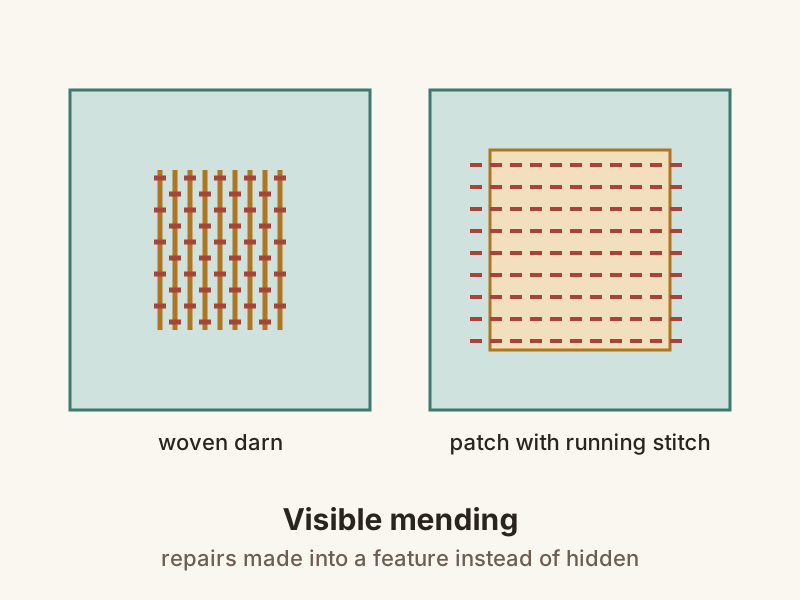
At the same time, secondhand shopping, clothing resale apps, rental and repair have grown, especially among younger shoppers. Visible mending, which makes repairs a decorative feature (darning, patches, sashiko-style stitching), became popular. For many people, making and mending their own clothes is a direct response to microtrends.
What this decade means for sewing
Technique hasn't changed. What's changed is the pace around it. Microtrends move faster than a garment can be sewn, which makes sewing your own clothes a deliberate choice of the opposite: garments chosen carefully, fitted properly, made to last and mended when they wear. That's a large part of why this site exists. The techniques on it take time to learn and pay off over years, not weeks.
This entry will need updating as the decade goes on.
Sources
- 2020s in fashion, Wikipedia - https://en.wikipedia.org/wiki/2020s_in_fashion