2010s Athleisure Silhouette
Activewear as everyday clothing, normcore, white trainers and streetwear, Instagram's effect on trends, the 2013 Rana Plaza collapse, and the revival of home sewing - plus what it takes to sew activewear.
Published · Updated

The defining look of the 2010s wasn't a particular dress shape but a category: athleisure, sportswear worn as everyday clothing. Leggings, hoodies, joggers, technical knits and trainers moved out of the gym and into offices, airports and restaurants. FIT traces it to the booming culture of boutique fitness studios, and it was embraced by celebrities and models photographed in luxury workout clothes off duty.
The main trends
- Athleisure. High-performance stretch fabrics, compression leggings, sports bras worn as tops, zip-up track jackets and expensive trainers, worn all day.
- Normcore. The opposite impulse: deliberately ordinary, unremarkable clothes, such as plain jeans, fleece and basic trainers, as a quiet rejection of conspicuous fashion. FIT describes it as an "emphasis on mundane, casual looks".
- White trainers. FIT notes that the Adidas Stan Smith became a fashion item after Phoebe Philo wore a pair at Paris Fashion Week in 2011, and that trainers outsold heels in the UK by 2016.
- Streetwear. Hoodies, logo T-shirts and limited-edition trainers became high fashion, especially in menswear.
- Tailoring and gender fluidity. The decade opened with slim, retro-inspired men's suits and ended with designers encouraging men to wear fabrics, colours and patterns traditionally thought of as feminine.
How trends spread
Instagram launched in 2010, and by mid-decade it had changed how fashion moved. Influencers with large followings replaced magazines and runway shows as the place many people discovered new styles, and brands began designing for how clothes looked in photographs. Combined with the fast fashion supply chains built in the 2000s, the trend cycle sped up again.
Rana Plaza
On 24 April 2013, the Rana Plaza building near Dhaka, Bangladesh, which housed several garment factories, collapsed. 1,134 people were killed and around 2,500 injured. Cracks had been found in the building the day before, but workers were sent back in. The factories made clothes for many well-known Western brands.
The disaster forced a wider public conversation about the human cost of cheap clothing. Within weeks, brands, retailers and trade unions signed the Bangladesh Accord on Fire and Building Safety, a binding agreement on factory safety inspections. The Fashion Revolution movement, with its question "Who made my clothes?", was founded in response. FIT notes that the disaster raised awareness, but that substantial change across the industry remained limited.
A revival in home sewing
The 2010s also saw a revival of home dressmaking, especially among younger people. Online sewing communities, blogs and video tutorials made learning easier. Independent pattern companies selling downloadable PDF patterns multiplied. Television sewing competitions brought dressmaking to a mainstream audience. Many people came to sewing because they wanted clothes that fitted, lasted, and didn't come from the supply chains exposed by Rana Plaza.
Sewing activewear
Athleisure is one of the most rewarding areas for home sewists, because good activewear is expensive to buy and quick to make, but it uses different skills from woven dressmaking:
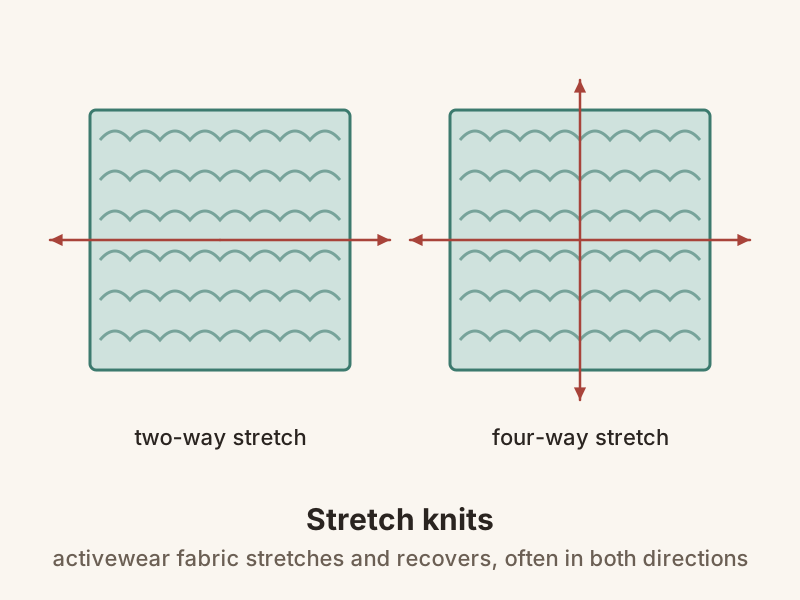
- Fabric: performance knits with spandex: nylon-spandex or polyester-spandex, often with four-way stretch, good recovery, and moisture-wicking finishes. Check the stretch percentage against the pattern. See Knit Fabrics.
- Needles: stretch needles to avoid skipped stitches.
- Seams: a 4-thread overlock, or a narrow zigzag or stretch stitch on a regular machine. Flatlock seams reduce chafing. See Serger / Overlocker.
- Hems: a coverstitch machine, or a twin needle on a regular machine.
- Waistbands: wide, often with elastic enclosed or a firm, high-recovery fabric cut with negative ease.
- Fit: activewear patterns use a lot of negative ease, so a fabric with less stretch than specified gives a garment that's far too tight.
The decade's concerns about how clothes are made carried directly into the 2020s, with renewed interest in mending, secondhand clothes and making your own.
Sources
- 2010-2019, Fashion History Timeline (FIT) - https://fashionhistory.fitnyc.edu/2010-2019/
- Rana Plaza collapse, Wikipedia - https://en.wikipedia.org/wiki/Rana_Plaza_collapse