Industrial Sewing Machine
What sets industrial machines apart from home machines - single-purpose design, speed, servo and clutch motors, the main machine types - and whether one makes sense in a home sewing room.
Published · Updated

An industrial sewing machine is built for continuous use in production, sewing all day, every day, in a factory or workroom. Where a domestic machine is a portable generalist with dozens of stitches, an industrial machine usually does one job, such as a straight lockstitch, an overlock, a coverstitch or a buttonhole, extremely fast and very consistently. A garment factory has rows of different machines, each set up for a single operation, and garments move from one to the next.
How they differ from home machines
- Single purpose. An industrial straight-stitch machine sews straight stitch only: no zigzag, no buttonholes. Each extra stitch type is a separate machine.
- Speed. Industrial lockstitch machines commonly run at several thousand stitches per minute, several times faster than most home machines.
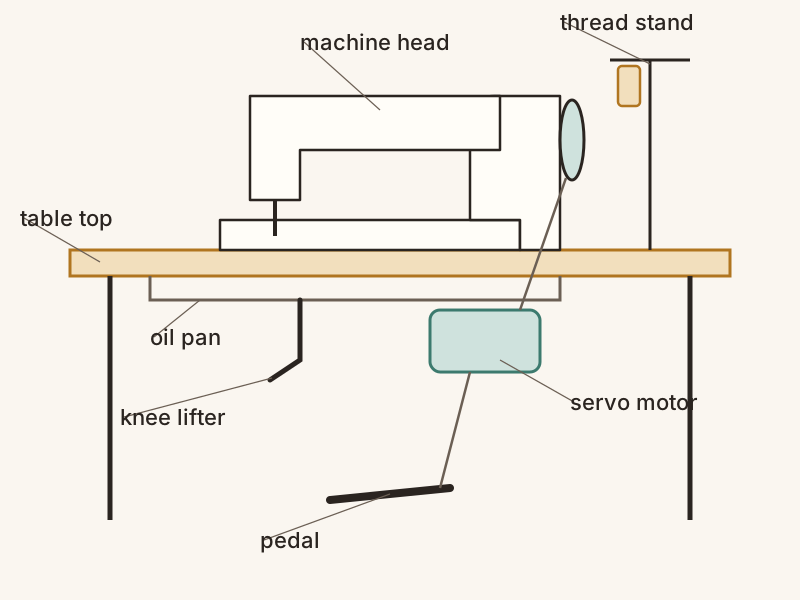
- Mounted in a table. The machine head sits in a large, sturdy table with the motor underneath, and isn't portable.
- Motor. Older and some current machines use a clutch motor, which runs continuously and engages the machine through the pedal. It's powerful but noisy, and hard to control at slow speeds. Most sewists now choose a servo motor, which is silent when idle, runs only when you press the pedal, and can be set to a low maximum speed. That makes an industrial machine much easier to learn on.
- Knee lifter. A lever under the table lifts the presser foot with your knee, so both hands stay on the fabric. Many also have automatic thread trimming and backtacking.
- Durability. Heavier castings, stronger feed mechanisms and oil-lubricated moving parts, built to run for decades with routine maintenance.
- Consistency over heavy fabrics. They sew thick layers of denim, canvas and coating without skipped stitches or straining.
The main types
- Single-needle lockstitch (flatbed): the basic straight-stitch machine, and the most common one for home use.
- Walking-foot machines: compound feed moves the fabric with the feed dogs, a walking foot, and sometimes the needle. Used for leather, upholstery, canvas and heavy outerwear.
- Overlockers (sergers) and coverstitch machines, for knits and seam finishing. See Serger / Overlocker.
- Cylinder-bed and post-bed machines, for sleeves, bags, shoes and other tubular or awkward items.
- Specialty machines: buttonhole, button-sewing, bar-tack, blind-hem and felling machines. A felling machine sews the two rows of a jeans flat-felled seam at once.
Should you get one?
An industrial straight-stitch machine with a servo motor is worth considering if:
- you sew a lot, especially heavier fabrics such as denim, canvas, coating or bags;
- you want a perfect straight stitch and precise speed control;
- you have room for a large table that stays in one place.
It's probably not the right choice if:
- it would be your only machine, because you'd still need a home machine for zigzag, buttonholes and stretch stitches;
- you need to put it away or move it;
- you sew mostly lightweight and varied projects, where a good domestic machine does everything you need.
Many home dressmakers who own one use it for straight seams and topstitching and keep a domestic machine for everything else, plus an overlocker for finishing.
Buying and setting up
Used industrial machines are widely available, often from closing factories or repair shops, and can be good value if checked by a technician. Check that the machine is set up for the fabric weights you sew: machines are configured as light, medium or heavy duty, with different feed dogs, needle systems and presser feet. Industrial machines use different needle systems from domestic machines, so buy needles that match the machine.
Maintenance is simple but regular. Most industrial heads are lubricated from an oil reservoir in the pan underneath, which needs checking and topping up. The manual or a technician will say how often to oil, clean out lint, and change the oil.
Learning to use one
The first few minutes are startling: even a gentle press on the pedal of a clutch-motor machine can send fabric shooting through. With a servo motor, set the maximum speed low while you learn and raise it as you get used to the machine. Practise controlling speed on scraps, using the knee lifter, and backtacking before starting a real garment.